
Project summary
Role: UX Designer
Platforms: Android and iOS
Responsibilities: UX strategy, fascilitating a design sprint: creating wireframes, prototypes and conducting usability tests and interviews.
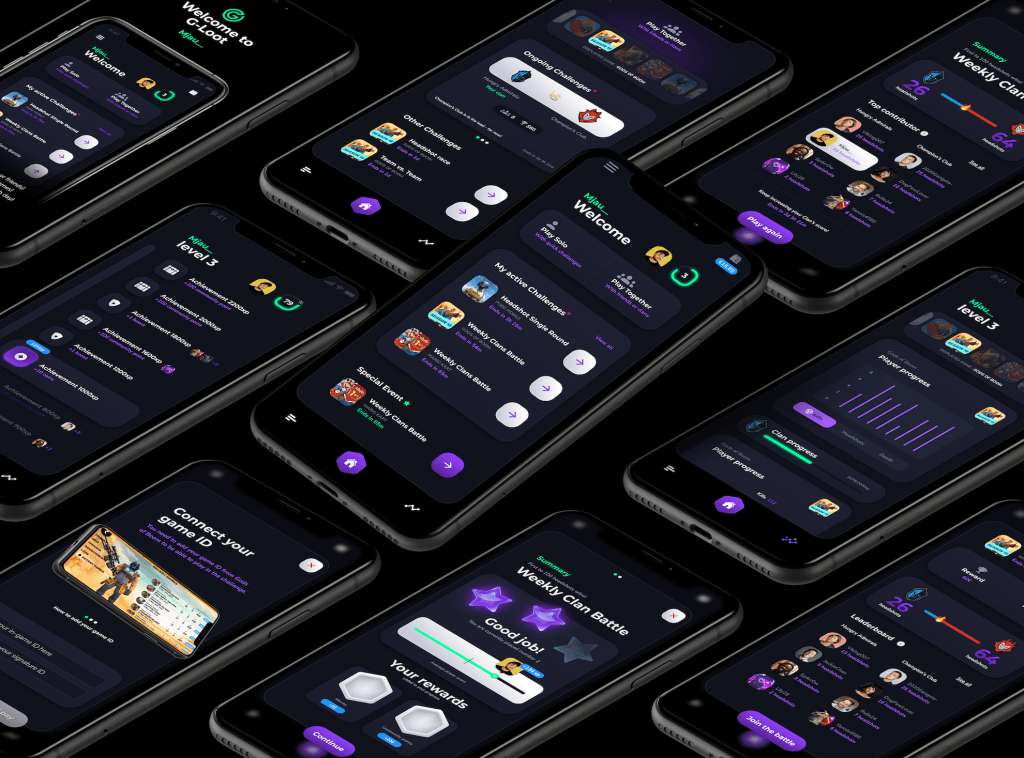
Goal: Revamp of the existing G-Loot app to make it closer to what the G-Loot PC app was but for mobile games. The goal of the G-Loot mobile app design sprint was to understand the target audience, experiment with social features, and refine the app’s design based on user feedback, creating a social and enjoyable addon to their gaming experience.




Index
Overview
When I first joined the team, there was some confusion about the purpose of the existing G-Loot app. The project manager was actively looking for ways to revamp it to better meet the company’s needs. By looking into what had been done before, I presented a strategy on how to proceed. I suggested involving the whole team to create a sense of inclusion and shared commitment to our success.
Over the course of two weeks, my team, consisting of developers, designers, and our project manager, engaged in various workshops, ultimately leading to a five-day design sprint. I took charge of facilitating these workshops. Given the challenges of the Covid-19 pandemic, all our collaboration happened online, making communication a bit tricky without in-person interactions.
The design sprint was intense but enjoyable, and we received promising results from user tests with potential users. However, as is common in startup environments, quick changes and new decisions came from top management, affecting the entire mobile team. Consequently, we couldn’t proceed with the concept at that time. It was only later, during G-Loot’s comprehensive revamp several years later, rebranded as Stryda, that the ideas from the design sprint came to live. Stryda embraced a social aspect of competitions with the introduction of clans and clan competitions.
Lean UX and assumptions
By following the process described in the book “Lean UX” by Jeff Gothelf and Josh Seiden, my team and I conducted several workshops to gain a better understanding of our business and users. We began with a business assumptions workshop, followed by a user assumptions workshop. During these sessions, it became evident that the team was not accustomed to working in this manner, leading to initial resistance. Some team members did not grasp the purpose of these workshops initially, but opinions changed upon witnessing the final results.
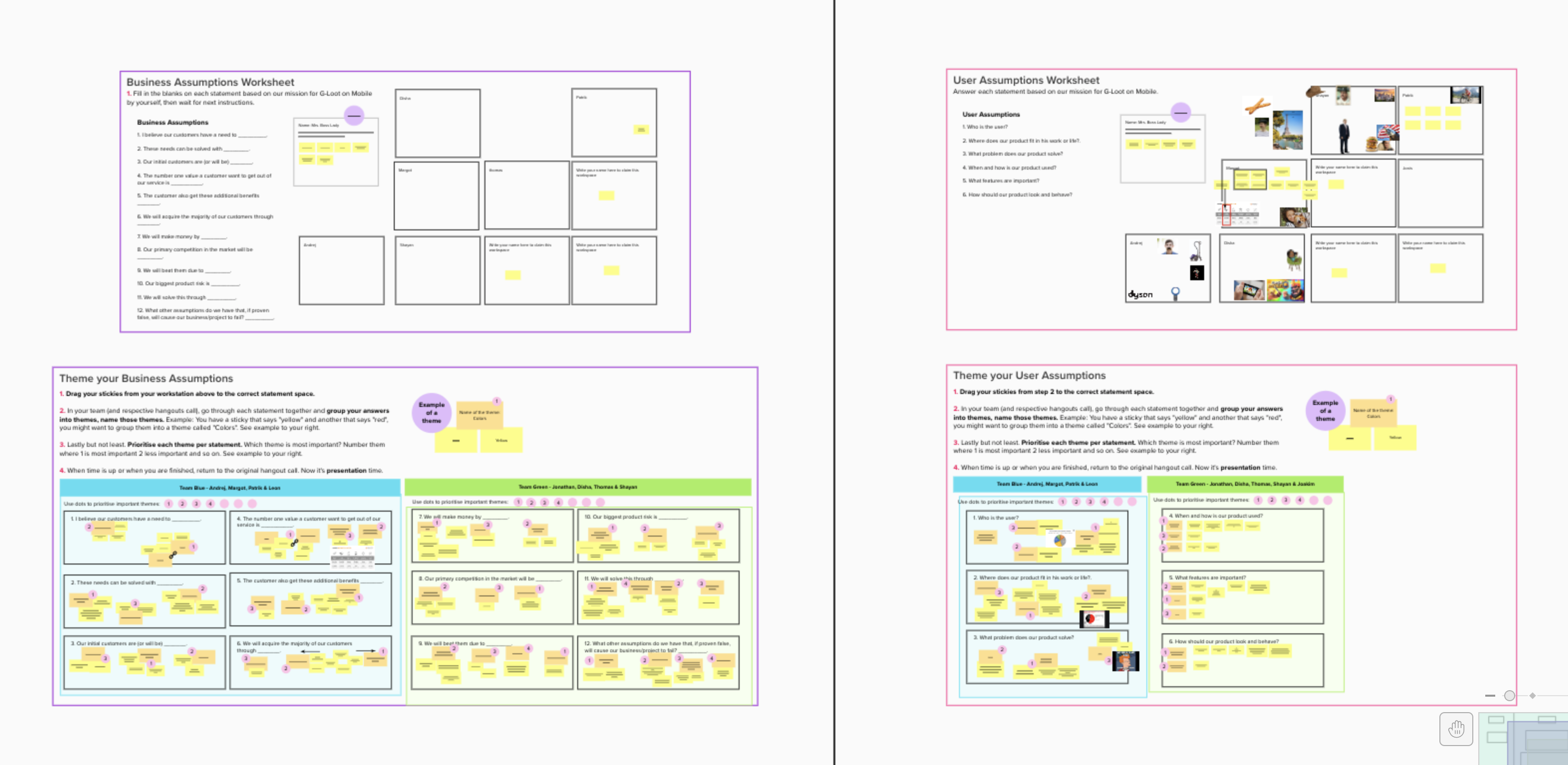
Creating proto-personas for G-Loot mobile

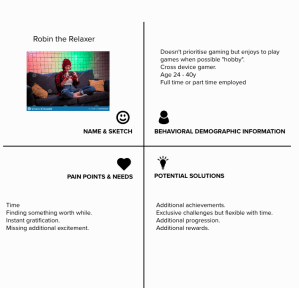
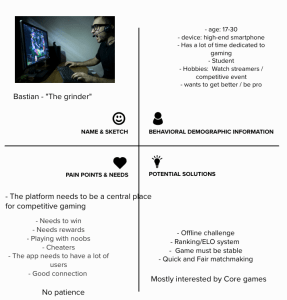
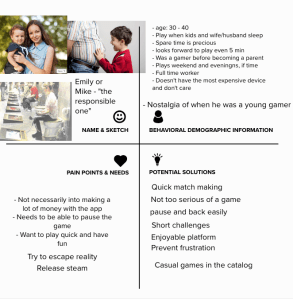
Our proto-personas workshop aimed to introduce potentially new users to the G-Loot world. Drawing inspiration from our existing personas who already engage with the G-Loot PC app and web platform, we developed proto-personas based on insights from earlier unmoderated user testing and the research paper, “The State of Mobile,” from App Annie (now data.ai).
We identified user types and grouped them into themes. The team then voted on the most accurate themes for G-Loot Mobile, resulting in proto-personas.
User types & themes
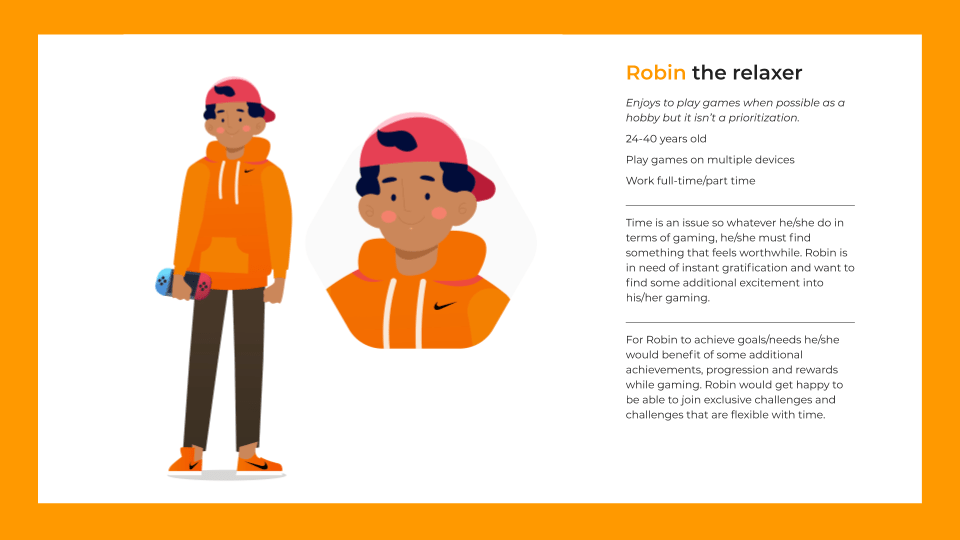
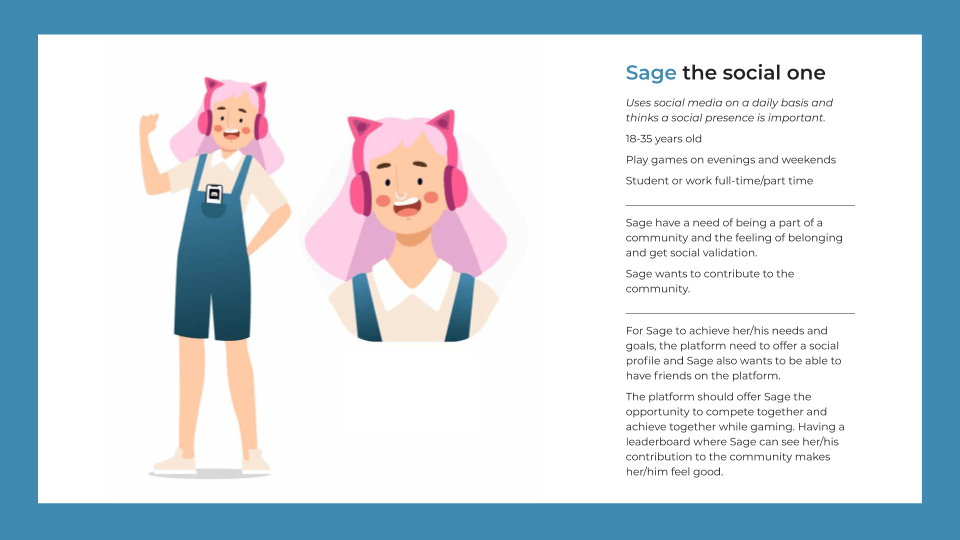
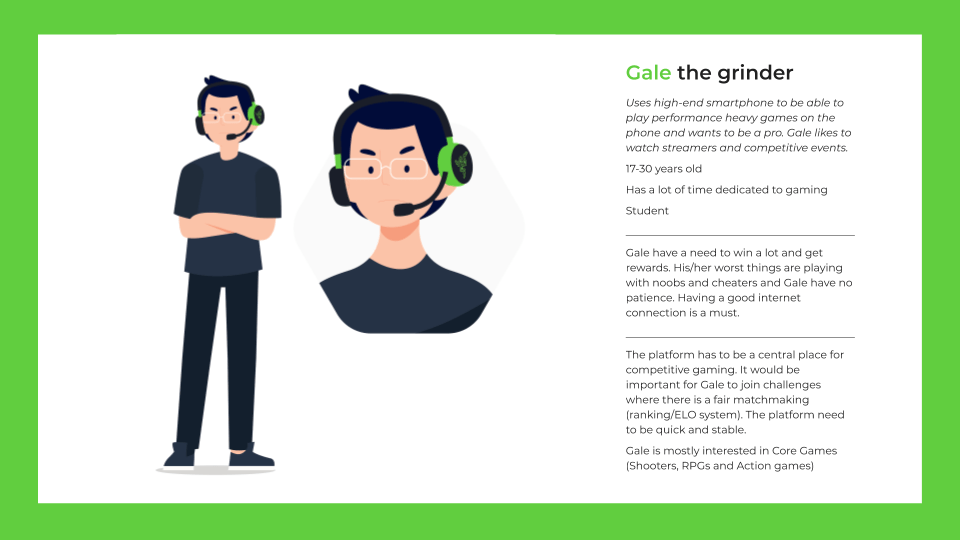
The team categorized assumptions based on their learnings into user types, creating themes for each group. The top four themes became proto-personas:
- Social Gamer
- Primary Persona: Sage the Social One (existing G-Loot persona)
- Casual Fun Gamer
- Secondary Persona: Robin the Relaxer (existing G-Loot persona)
- Competitive Player
- Secondary Persona: Bastian the Grinder
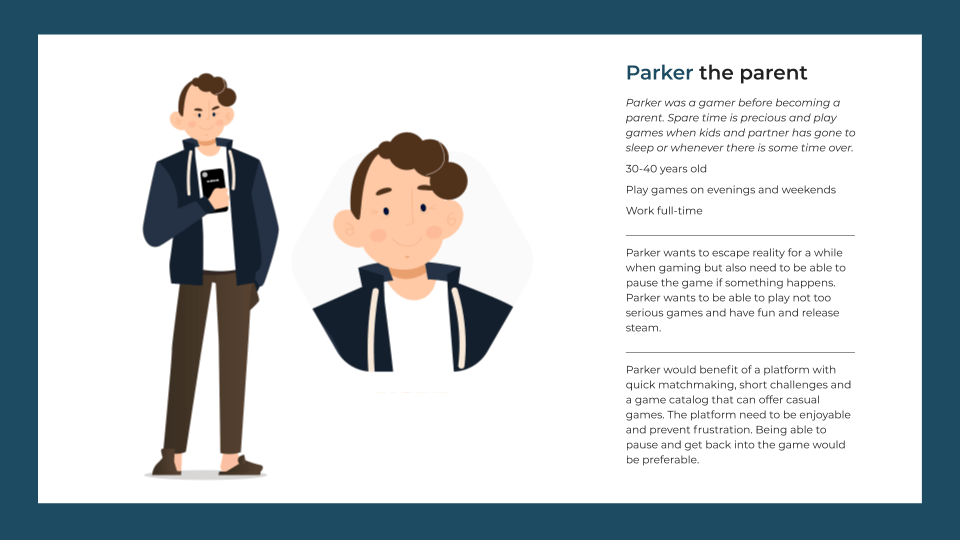
- Parent Player
- Secondary Persona: Parker the Parent
Design sprint
Prepared for the design sprint, a 5-day sprint inspired by versions created by Google Ventures and the Sprint Book by Jake Knapp. We initiated the sprint with a session on sprint goals, and later on by a “How Might We” session to explore topics based on previous research.
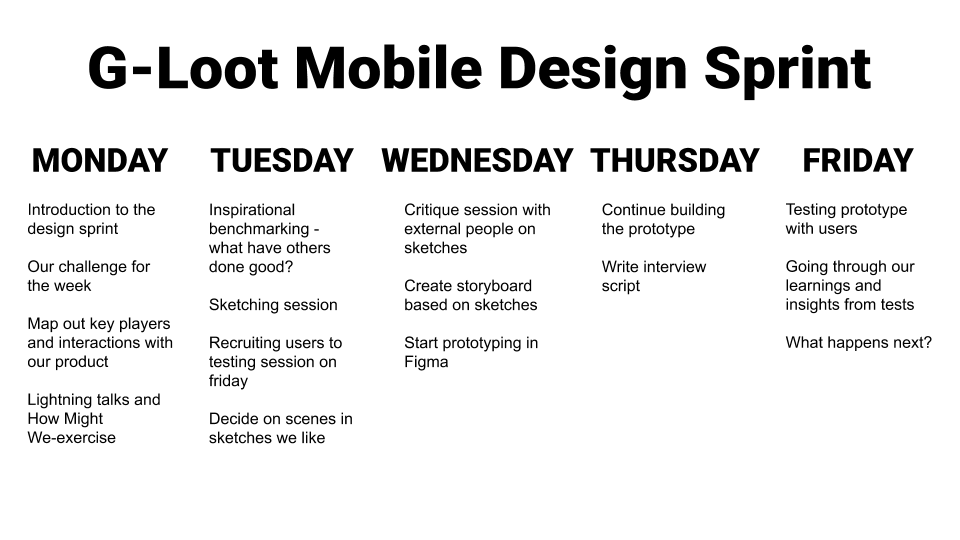
In the beginning of the Design Sprint, we had a session about Sprint goals and went through a How Might We-session on things we wanted to look into in this sprint based on the research we had done so far at G-Loot (G-Loot personas, reviews on Google App store on the existing app, previous research on the previous mobile app etc).
Sprint goals:
- Can we validate users, and knowing that we are targeting the right audience?
- Can we validate how to gain trust?
- Can we validate that our app is interesting even without the money?
How Might We questions
- How might we make the app interesting in more ways than money?
- How might we convince players to download and use our app?
- How might we increase trust?
- How might we make our service legal in all aspects?
- How might we make the app part of users’ daily lives?
- How might we get users to play again after losing?
During the design sprint, we kept in mind trust issues related to real money competitions and explored making the app engaging beyond financial rewards.
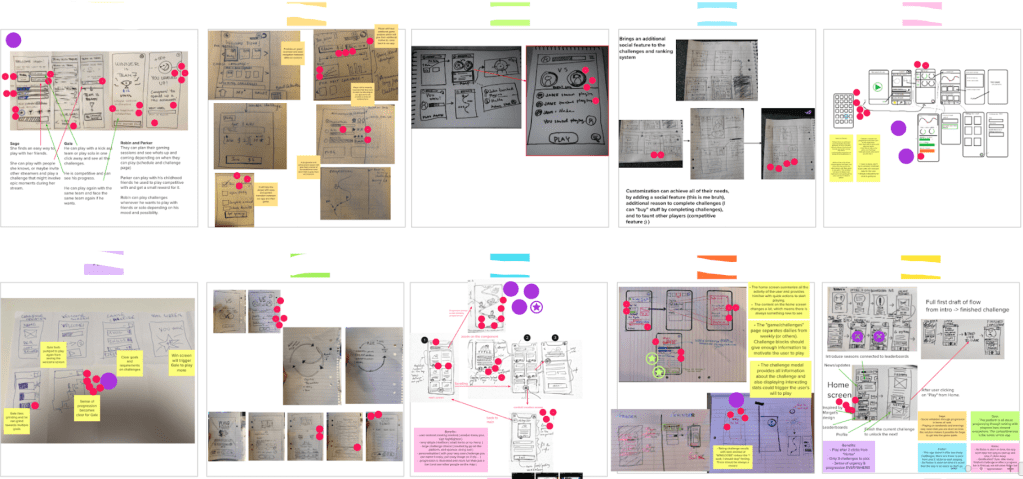
Ideas went into sketches, sketches into a storyboard, a storyboard into wireframes, wireframes into mockups and mockups into an interactive prototype…
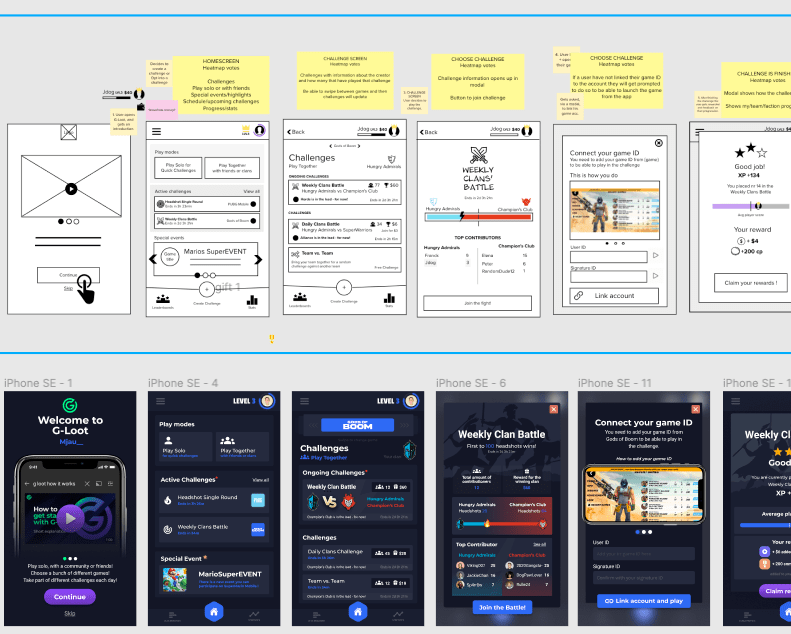
On day 4, we finalized a storyboard by merging the top-voted sketches into wireframes and began constructing the prototype. The prototyping process involved me, another UX designer, and our UI designer. We transformed wireframes created in Mural into an interactive prototype using Figma. This prototype was then tested with potential users who underwent our screening test to ensure they were genuine gamers with a sincere interest in our study.
Results
In just five days, we successfully delivered interactive high-fidelity prototypes and gathered valuable user feedback. This quick turnaround allowed us to update our designs promptly, addressing clear usability issues identified during the test sessions.
Our efforts in the design sprint yielded impressive results aligned with our goals:
- Trust Rating: 8.2/10
- Users perceived our design as professionally done, enhancing trust. Notable mentions included a positive response to the design’s quality and the presence of trusted brands like Super Mario.
- Interesting Rating: 8.8/10
- Users expressed a high level of interest, noting that they hadn’t encountered anything similar before.
- Share with Friends Rating: 9.0/10
- Users indicated a strong inclination to invite friends who share the same gaming interests, potentially using the app in a clan setting.
Insights from our “How might we” questions during testing revealed:
- Excitement for “Clans” and Group Challenges
- Users found the concept of challenging a group or participating in clans exciting, suggesting opportunities for more clan-based challenges.
- Appreciation for Teamwork and Progress
- Users showed enthusiasm for collaborative play, emphasizing the appeal of teamwork and progress within the app.
- Validation of Trust Through Existing Solutions
- Users expressed trust in our app by citing existing solutions, recommendations from friends, and positive ratings on play stores.
- Considerations for Authentication, Payment Providers, and Game Selection
- Feedback highlighted the importance of thoughtful choices in authentication methods, trusted payment providers, and inclusion of well-known games, as users tend to trust products based on their appearance and established brand logos.
- Correcting Assumptions Through User Interaction
- A crucial realization emerged as one of our assumptions about proto-personas proved incorrect. This underscored the importance of early user interaction, reminding the team to rely on user insights rather than assumptions in design and development processes.
Learnings
I facilitated workshops entirely online for the first time. The absence of a clean whiteboard, the inability to drop post-it notes and pens on a table, and the lack of face-to-face interactions posed initial challenges. However, every obstacle came with an opportunity for innovation. Thank you Mural and templates ready to be used!
I learned to create effective “breakout-rooms” in Google Meet and set up Mural for each workshop session. Despite the tedious work of preparing everything online, it felt rewarding enough to be able to spice things up with GIFs, adding a touch of humor to create a collaborative and fun vibe for the team.
One significant learning from this experience was the challenge of not being able to see everyone, as some participants chose not to turn on their video during the workshops. This posed difficulties in gauging understanding, identifying struggles, and assessing fatigue levels before scheduled breaks. Additionally, I discovered the importance of defining focused goals for sprints. A broad objective can lead to unnecessary exhaustion and confusion, especially in the intense environment of a design sprint.
Not seeing each other in real life was the biggest issue mentioned by several team members during our retrospective. Despite these challenges, the team expressed their enjoyment of various aspects of the design sprint:
- Teamwork and the group focus
- Unleashing a plethora of ideas collectively
- Active participation in testing sessions (x6)
- Collaborative brainstorming with everyone involved
- Constructing a long-term vision collectively
- Valuing the diverse and great ideas contributed by each team member
This retrospective feedback and the insights underscored the team’s adaptability, creativity, and resilience, contributing to a successful design sprint outcome.
 Ida Mannerstål